AngloGold Holds 3 Million-Ounce 2026 Target as Ghana Disruptions Ease
MiningOct 6, 2026
Africa
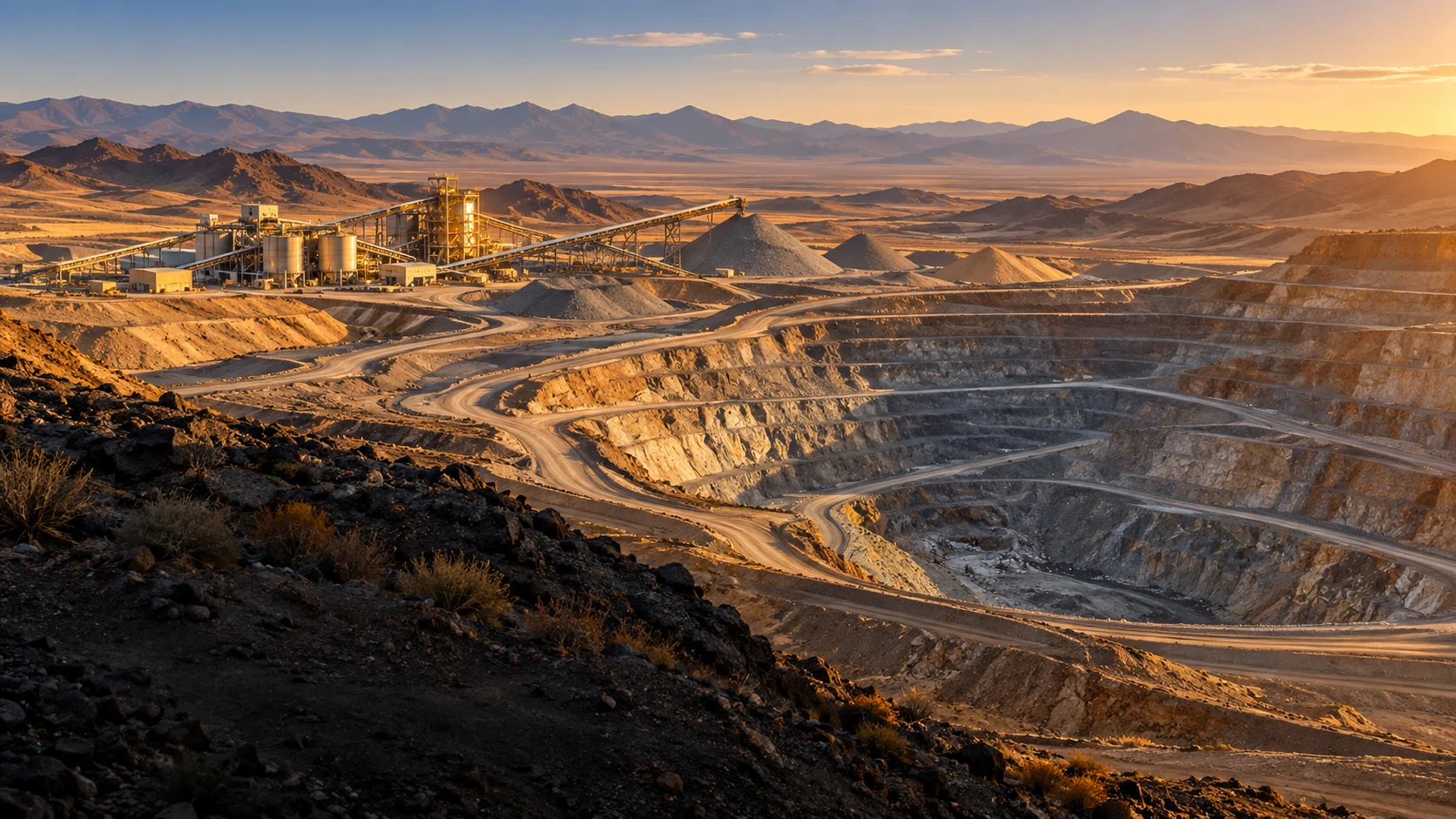
AI-generated illustration of a gold operation; not a photograph of an AngloGold Ashanti mine.
AngloGold Ashanti expects to produce about 3 million ounces of gold in 2026, the midpoint of its existing guidance, despite interruptions at two Ghanaian operations. Chief Executive Alberto Calderón said stronger performance across the rest of the portfolio had offset flooding at Iduapriem and the closure of the KMS shaft at Obuasi following a fatality. The company has not raised its annual target. 1
At Iduapriem, heavy rainfall and water entering from the neighbouring Tarkwa pit affected access to higher-grade mining areas. Calderón said the operation had recovered from the flooding, although the disruption had already affected the year’s production profile. Iduapriem is an open-pit operation feeding a conventional crushing, SAG-ball milling and carbon-in-leach circuit; lost access to preferred pit feed can affect both tonnes and delivered grade. 12
Obuasi’s interruption has a different operating mechanism. The KMS shaft closure followed a fatal incident, restricting underground access and logistics rather than open-pit ore availability. Calderón acknowledged the impact on 2026 but maintained the company’s medium-term objective of about 400,000 ounces from Obuasi in 2028. That remains a target, not achieved production. 13
The broader portfolio is the reason management believes it can absorb both setbacks. Calderón highlighted particularly strong performance from South American mines and Tropicana in Australia. Sustaining group guidance does not mean Ghana’s lost ounces have been recovered at the affected shafts or pits. It means production elsewhere is expected to compensate within the consolidated range. 1
AngloGold also set out a brownfield growth ambition of 350,000 to 450,000 additional annual ounces over roughly three years across Geita, Cuiabá, Obuasi, Sukari and Siguiri. Management described a gradual increase rather than a single commissioning event. Planned work includes plant expansion at Geita, satellite ore sources at Cuiabá, use of spare processing capacity at Siguiri and more underground output at Sukari. At Obuasi, the longer-term plan depends in part on access to higher-grade Block 11 ore. 1
These projects differ substantially in capital intensity and technical risk. Spare mill capacity is of limited value without sufficient mineable feed; underground expansion depends on development metres, ground conditions and ventilation; and a higher-grade mining block cannot support a production forecast until the access sequence is delivered. The company has not broken the 350,000–450,000-ounce ambition into firm annual contributions for each operation in the cited remarks. 1
Capital allocation provides another constraint. Management reiterated a policy to return at least half of free cash flow to shareholders after investment needs, while also advancing longer-dated projects including Arthur in Nevada and Quebradona in Colombia. The 2026 guidance statement is therefore best read as evidence of portfolio resilience, not proof that the Ghana disruptions carry no cost. 1
Investors will get a clearer measure of that resilience from the next production report: whether Iduapriem’s ore access and Obuasi’s shaft availability normalise, and whether the other mines continue to compensate without an adverse shift in unit costs. 1
Related Projects
Iduapriem Mine
AU | mine
Western Region, Ghana
AngloGold Ashanti Iduapriem open-pit gold mine in Ghana.
Loading project location…
Open location Obuasi Gold Mine
AU | mine
Ashanti Region, Ghana
AngloGold Ashanti operates Obuasi in Ghana, a major underground gold mine in the Ashanti region.
Loading project location…
Open location